
From Data to Decisions: An Introduction to the IoT Analytics Industry
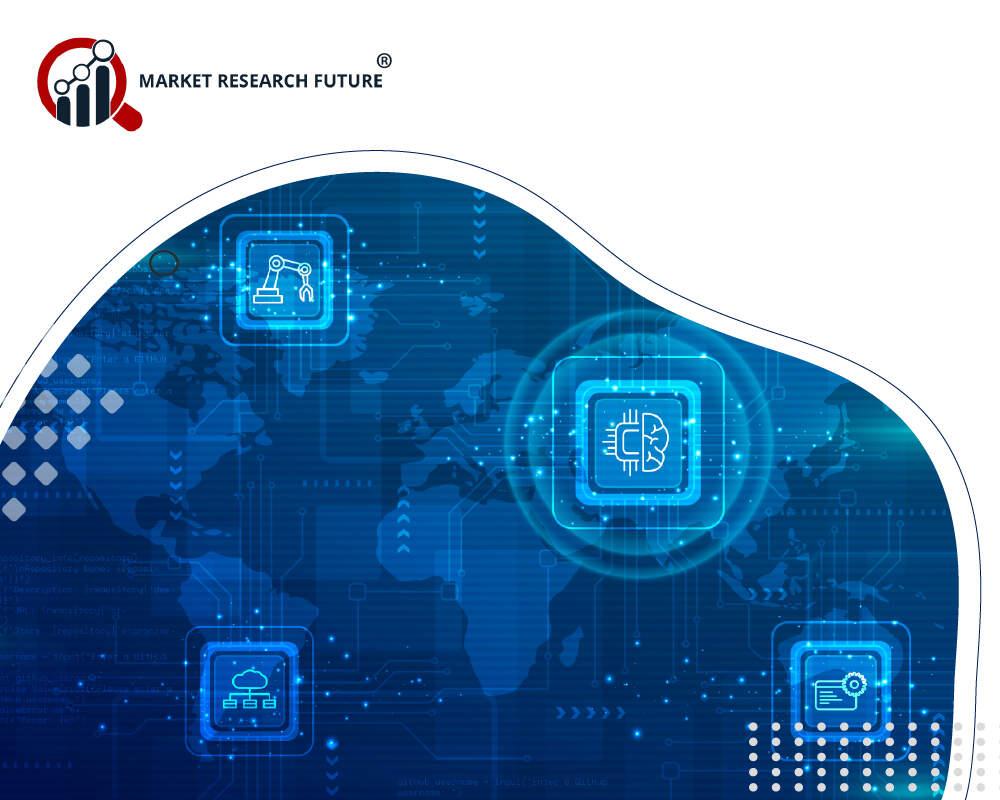
In the modern era of hyper-connectivity, the world is being blanketed by billions of "smart" devices, from industrial sensors and connected vehicles to smart home appliances and wearable fitness trackers. The Iot Analytics industry is the critical sector dedicated to making sense of the colossal and continuous streams of data generated by this Internet of Things (IoT). IoT analytics is the process of applying advanced analytical tools and machine learning algorithms to the vast datasets produced by connected devices to uncover hidden patterns, predict future outcomes, and trigger automated actions. It is the "brains" of the IoT ecosystem, transforming the raw, often noisy, sensor data into valuable, actionable intelligence. Without analytics, the IoT is just a collection of "things" generating a meaningless flood of data. With analytics, it becomes a powerful system for optimizing industrial processes, creating smarter cities, delivering personalized healthcare, and building more efficient supply chains. This industry provides the essential software and platforms that bridge the gap between collecting data and creating tangible business value, making it a cornerstone of the ongoing digital transformation across all sectors of the economy.
The core function of the IoT analytics industry is to guide data through a value creation pipeline, which typically involves several key stages. The first stage is data ingestion and storage. This involves reliably collecting the high-velocity, high-volume data streams from thousands or millions of distributed devices and storing them in a scalable data platform, which could be a data lake or a specialized time-series database. The second stage is data processing and preparation. Raw sensor data is often messy, with missing values, erroneous readings, and different formats. In this stage, the data is cleaned, normalized, and enriched with contextual information (e.g., adding location data to a sensor reading). The third and most critical stage is analysis. This is where the actual insights are generated. This can range from simple descriptive analytics (e.g., creating a dashboard showing the real-time temperature of all machines in a factory) to advanced predictive analytics (e.g., using a machine learning model to predict when a machine is likely to fail) and prescriptive analytics (e.g., automatically generating a work order for the impending failure). The final stage is action and visualization, where the insights are presented to users on dashboards or are used to trigger automated actions, like adjusting a thermostat or shutting down a piece of equipment.
The ecosystem of the IoT analytics industry is a complex and multi-layered landscape, featuring a wide range of technology providers. At the foundational layer are the major public cloud providers, such as Amazon Web Services (AWS), Microsoft Azure, and Google Cloud. They offer a comprehensive suite of services that form the building blocks for IoT analytics solutions, including IoT device management services (like AWS IoT Core), scalable data storage, and powerful analytics and machine learning platforms. The next layer consists of dedicated IoT platform vendors, like PTC and Siemens, who offer more end-to-end solutions, often with a specific focus on industrial IoT (IIoT). These platforms combine device connectivity, data storage, and analytics into a more integrated package. A third and very important group is the analytics and business intelligence (BI) software vendors. This includes traditional BI players like Tableau and Power BI, who provide the visualization tools, as well as advanced analytics specialists who provide the machine learning algorithms and platforms for building predictive models. Finally, a host of startups and niche players offer specialized solutions for specific industries or specific types of analytics, such as geospatial or video analytics.
Looking ahead, the future of the IoT analytics industry is being shaped by the move towards the edge and the rise of artificial intelligence (AI). While cloud-based analytics will always be important for large-scale analysis and model training, there is a growing need to perform analytics directly on or near the IoT device itself. This is known as edge analytics. It is essential for applications that require real-time decisions and low latency, such as an autonomous vehicle or a quality control system on a high-speed production line. The industry is responding by developing lightweight analytics engines and AI models that can run on resource-constrained edge devices. AI is also making the analytics themselves more powerful and autonomous. Instead of just identifying patterns, future systems will be able to understand context, adapt to changing conditions, and make more sophisticated decisions. The ultimate vision is a distributed intelligence network, where a seamless interplay between edge and cloud analytics creates a truly smart, responsive, and self-optimizing environment, unlocking the full transformative potential of the Internet of Things.
Top Trending Reports:
Privileged Access Management Solutions Market
Mobile Satellite Services Market
Independent Software Vendors Market
 Turkish
 English
 Arabic
 French
 Spanish
 Portuguese
 Deutsch
 Dutch
Dutch
 Italiano
 Russian
 Romaian
 Portuguese (Brazil)
 Greek
Greek