


Military Hydrophone Market Forecast: Strategic Trends and Growth Trajectory through 2034
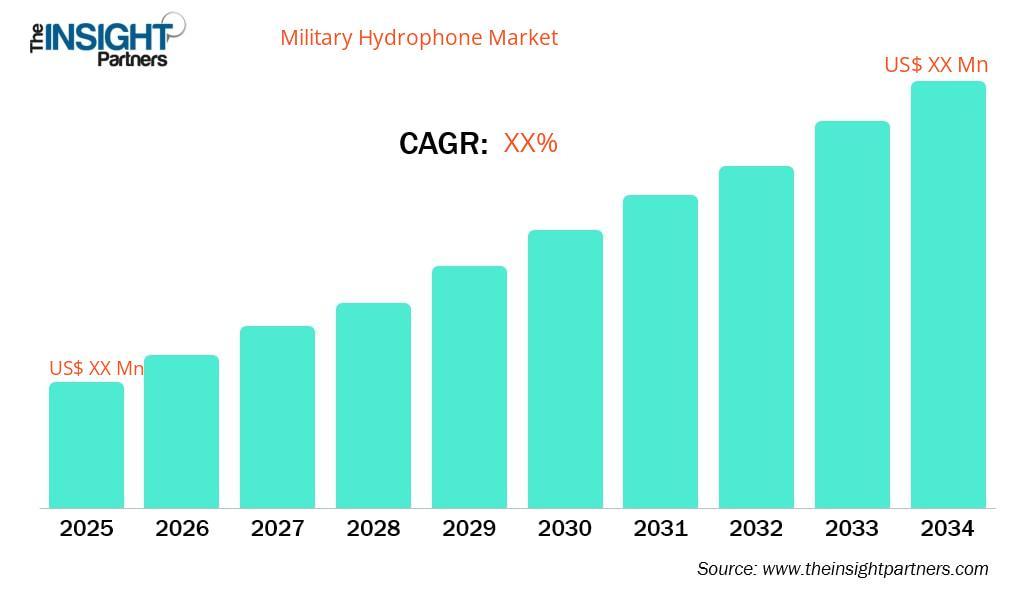
The landscape of underwater surveillance is witnessing a transformative era as defense agencies pivot toward advanced acoustic sensing technologies. The Military Hydrophone Market is anticipated to record consistent growth from 2026 to 2034, with its valuation projected to grow from the 2025 baseline and progress through a sustained expansion until the end of the forecast period. This trend reflects a favorable market outlook driven by evolving industry requirements and ongoing technological advancements.
As naval warfare shifts toward silent operations and deep-sea dominance, the reliance on high-sensitivity hydrophones has never been more critical. These sensors form the backbone of passive sonar systems, enabling the detection of stealth submarines and unmanned threats without revealing the host platform's position. This strategic necessity is a primary catalyst for the Military Hydrophone Market Forecast, which anticipates a steady climb in adoption across both surface and sub-surface fleets.
Download Sample Report –
https://www.theinsightpartners.com/Sample/TIPRE00017703
Current market analysis indicates that the hydrophone sector is set to reach a valuation of approximately USD 0.26 billion by 2035, expanding at a CAGR of 5.75%. This growth is heavily concentrated in the defense segment, which currently accounts for nearly 42% of the total demand for piezoelectric acoustic sensors.
Key Drivers Shaping the Market Forecast
A significant driver identified in the is the rapid proliferation of Unmanned Underwater Vehicles (UUVs) and Autonomous Underwater Vehicles (AUVs). These platforms require miniaturized, low-power hydrophone arrays to perform complex reconnaissance and mine countermeasure missions. As global navies integrate "drone swarms" into their maritime strategy, the volume of hydrophones required for these expendable or semi-autonomous units is expected to rise exponentially.
Another critical factor is the heightening of geopolitical tensions in contested waters. Nations are increasingly investing in fixed seafloor surveillance networks to protect territorial integrity and subsea energy infrastructure. These permanent installations utilize thousands of hydrophone nodes to create "smart" underwater borders, driving long-term procurement contracts for manufacturers capable of producing high-durability, deep-sea sensors.
Furthermore, the transition to vector hydrophones is redefining market expectations. Unlike traditional pressure-sensitive hydrophones, vector sensors can determine the exact direction of a sound source with a single unit. This technological leap reduces the physical footprint of sonar arrays while increasing the accuracy of target localization, making them a preferred choice for the next generation of stealth frigates and attack submarines.
Technological Evolution and Material Innovation
The is also influenced by breakthroughs in material science. The shift from standard piezoelectric ceramics to single-crystal materials and fiber-optic technologies is enhancing signal-to-noise ratios in increasingly "noisy" littoral environments. Fiber-optic hydrophones, in particular, are gaining traction due to their ability to be multiplexed over several kilometers without the need for underwater electronics, significantly improving system reliability and reducing maintenance costs.
Top Industry Players
The market is supported by a robust ecosystem of defense contractors and specialized sensor manufacturers. The following companies are recognized as top players driving innovation in this space:
- Teledyne Marine (A division of Teledyne Technologies)
- Thales Group
- L3Harris Technologies, Inc.
- Ultra Maritime
- Northrop Grumman Corporation
- Kongsberg Maritime
- BAE Systems PLC
- Raytheon Technologies
- Atlas Elektronik GmbH
- GeoSpectrum Technologies Inc.
The through 2034 highlights a sector characterized by steady investment and high-tech integration. As maritime security threats become more sophisticated, the demand for precision acoustic monitoring will remain a cornerstone of global naval defense budgets, ensuring a stable and lucrative path for industry participants.
Contact Information -
Email: sales@theinsightpartners.com
Phone: +1-646-491-9876
Also Available in :
 Deutsch
 English
 Arabic
 French
 Spanish
 Portuguese
 Turkish
 Dutch
Dutch
 Italiano
 Russian
 Romaian
 Portuguese (Brazil)
 Greek
Greek